

FDA Regulations for OTC Hearing Aids What They Mean for You in 2026
Over-the-counter (OTC) hearing aids are real medical devices regulated by the U.S. Food and Drug Administration (FDA). That regulation is

If you’re 50+ and noticing you miss words (not just sounds), you’ve probably thought about going to a hearing clinic—then stopped because it’s expensive, time-consuming, and sometimes a 30-minute drive each way. The good news: today’s OTC hearing aids can do something that used to require an office visit—an app hearing test that outputs an audiogram, then helps you fit (program) the hearing aids at home.
This article explains how an app hearing test + audiogram + self-fitting works, who it’s best for, and how to get the best results (with less noise and less whistling). We’ll also show a simple way to choose between two advanced OTC options: PureHear Pro H8 and Nature Pro H9—both built for people who want high-end features without prescription-level costs.
Quick safety note: The FDA’s OTC hearing aid category is intended for adults (18+) with perceived mild to moderate hearing loss, and some people should still get a professional evaluation first. (U.S. Food and Drug Administration)
Internal links (use these exact anchors):
An app hearing test is a guided sound test you can do on your phone. In a quiet room, you listen to tones (or speech sounds) and respond in the app. It takes about 5 minutes for many users, and you can do it without driving to a clinic.
An audiogram is a chart that shows the softest sounds you can hear at different pitches (frequencies). Clinically, audiograms are created using calibrated equipment—so an app-based audiogram is best viewed as a useful starting point for self-fitting and ongoing fine-tuning, not a replacement for a full diagnostic exam.
Why this matters for real life:
If you live outside a city, a hearing appointment can mean: scheduling, traffic, parking, waiting rooms—and a round trip that can easily be 20 miles / 30 minutes or more.
A home test changes the routine completely:
That “retest anytime” benefit is especially valuable because your hearing experience changes with:

The FDA explains that OTC hearing aids are for adults with perceived mild to moderate hearing loss, and that self-fitting OTC hearing aids can offer greater customization through hearing tests, software, and smartphone apps. (U.S. Food and Drug Administration)
Speech understanding often becomes noticeably difficult as hearing thresholds rise. ASHA lists common hearing-loss degree ranges (mild, moderate, etc.). (ASHA)
NIDCD also notes that severe to profound losses are present when PTAs are >70 dB HL, and at that level hearing aids may provide limited benefit and cochlear implants may be considered. (NIDCD)
Your positioning (from your requirements):
Here’s the “magic” people care about:
This is the modern alternative to “buy it, turn it up, and hope for the best.”
The FDA specifically calls out that self-fitting OTC hearing aids may provide greater customization through hearing tests and smartphone apps. (U.S. Food and Drug Administration)
You asked to include up to 60 dB gain and “comparable to expensive fitted devices.” High gain can help people who feel basic amplifiers aren’t enough—especially for speech. Just remember: the best results come from gain plus proper fitting and processing.
You also asked to include up to 80% speech recognition. The safest way to present this is as a manufacturer performance claim and note results vary by person, environment, and correct fitting.
Whistling (feedback) happens when amplified sound leaks and gets re-amplified. This is common, fixable, and often related to fit, wax, or positioning.
Fast anti-whistling checklist:
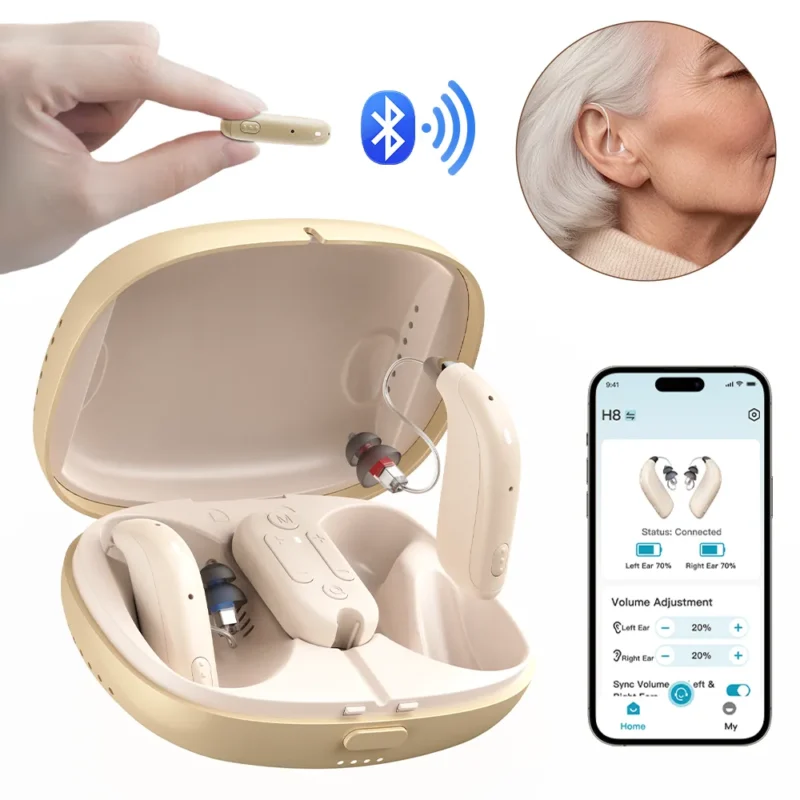
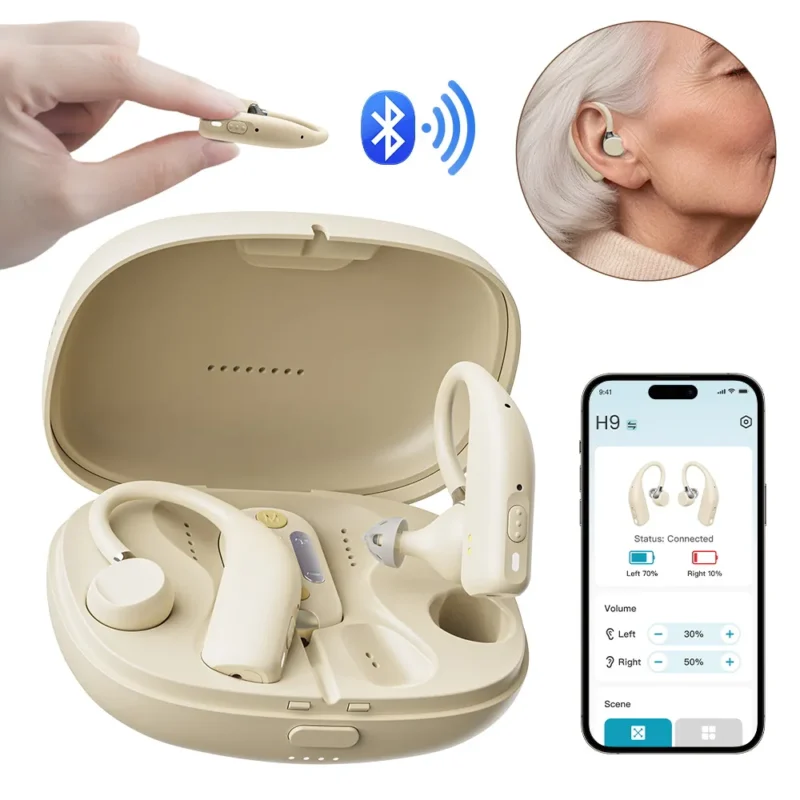
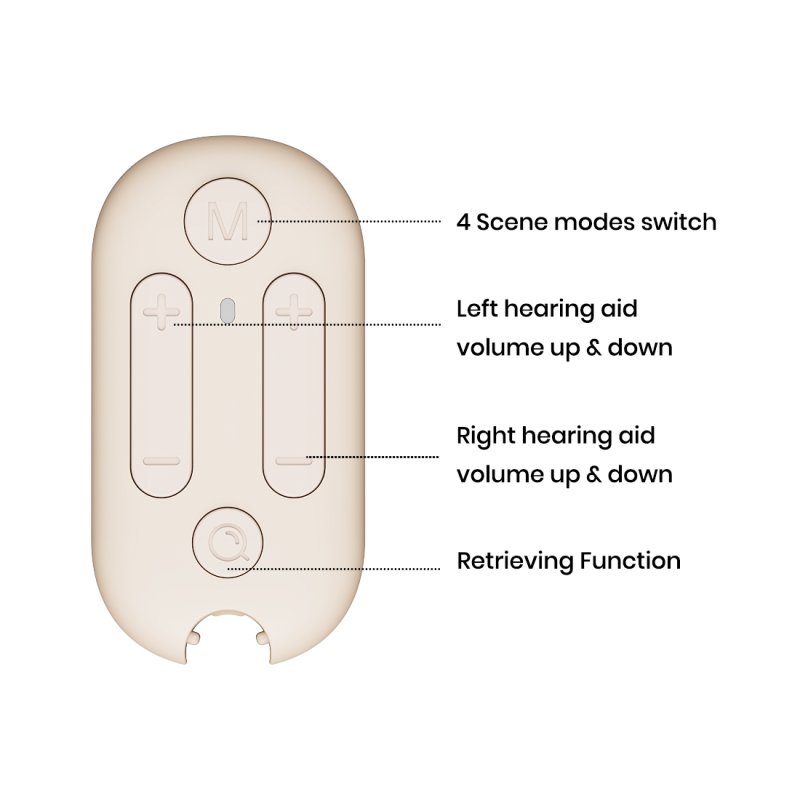
Both models are designed around what your customers want: advanced features, app-based testing and fitting, mode control, noise reduction adjustment, Bluetooth, and easy charging.
Choose H8 if you want:
Link: PureHear Pro H8 (RIC) hearing aid
https://www.flysounds.com/product/h8-ric-hearing-aid/
Choose H9 if you want:
Link: Nature Pro H9 (BTE) hearing aid
https://www.flysounds.com/product/h9-bte-hearing-aid/

For many adults 50+, battery stress is real—tiny batteries are annoying, and dead devices are frustrating.
Your product points to highlight:
Why drying is a big deal: moisture is one of the most common enemies of daily-wear devices. A drying case helps maintain comfort and reliability—especially if you live in humid areas or perspire.
Here’s a simple approach that matches how people actually adapt:
The key advantage of your app workflow:
If today feels too sharp or too noisy, retest and adjust. If tomorrow feels better, keep it. This is exactly why daily retesting is a powerful “senior-friendly” feature.
It can be a convenient starting point for self-fitting, but it does not replace a full diagnostic evaluation—especially if you suspect severe/profound loss or have warning signs. (U.S. Food and Drug Administration)
The FDA says OTC hearing aids are intended for adults with perceived mild to moderate hearing loss, and self-fitting options may use hearing tests and smartphone apps. (U.S. Food and Drug Administration)
Feedback (whistling) occurs when amplified sound escapes the ear canal and is picked up again by the microphone. Fit and cleaning often solve it.
Based on your requirements:
Your Refund and Returns Policy states a 50-day return window from delivery and outlines the process and conditions. (The Best AI OTC Hearing Aids Flysound)
Policy link: https://www.flysounds.com/refund_returns/
If your goal is advanced features + home testing + daily adjustability, start with the style you’ll wear every day:
Educational disclaimer: This article is general information, not medical advice. If you have sudden hearing loss, dizziness, pain, drainage, or suspect severe/profound loss, seek professional care. (NIDCD)
Over-the-counter (OTC) hearing aids are real medical devices regulated by the U.S. Food and Drug Administration (FDA). That regulation is

If you’re 50+ and noticing you can “hear” people but can’t always understand them—especially in restaurants, family gatherings, or on
The Annoying Whistle Is Not Your Fault If you’ve ever put on a hearing aid and heard that sharp “eeee”

If you’re 50+ and struggling to hear family conversations, TV dialogue, or the person across the dinner table, you’re not