

FDA Regulations for OTC Hearing Aids What They Mean for You in 2026
Over-the-counter (OTC) hearing aids are real medical devices regulated by the U.S. Food and Drug Administration (FDA). That regulation is

If you’ve ever put on a hearing aid and heard that sharp “eeee” sound, you already know how frustrating feedback can be. It can feel embarrassing in a quiet room, distracting during family conversations, and exhausting if it happens again and again.
Here’s the good news: whistling (also called feedback) is a well-understood problem, and modern hearing aids can reduce it dramatically using better fit design plus advanced digital sound processing. (ASHA)
In this guide, you’ll learn:
Whistling usually happens when amplified sound leaks out of the ear canal and gets picked up again by the hearing aid microphone. That creates a loop, and the loop produces the squeal. (Better Hearing)
Common real-life triggers include:
So yes—fit and maintenance matter, even with the best technology.
But technology matters too, especially if you want higher gain.
If your hearing loss is more than mild, you may need stronger amplification—sometimes up to the kind of power that cheaper “sound amplifiers” simply can’t handle well.
The challenge is: more gain increases the chance of feedback, especially in open-fit styles. That’s why advanced feedback control is a major differentiator between basic devices and modern hearing aids. (PMC)
If you’re shopping for affordable OTC hearing aids that still feel “high-end,” feedback control is one of the most important features to look for.
You’ll see phrases like “feedback cancellation,” “whistle control,” or “whistle-free algorithm.” What does that actually mean?
Modern hearing aids use digital signal processing (DSP) to detect feedback and reduce it in real time. One widely described approach is:
Some systems use adaptive filters that constantly update as your environment changes (walking, turning your head, moving your hand near your ear). This matters because the feedback “path” can change second by second. (PMC)
In plain English:
A modern chip is fast enough to notice the beginning of whistling and “remove it” before it becomes loud and annoying.
That’s why newer hearing aids can stay more stable at higher gain than older models, and why people often describe them as “quiet” or “no whistling.”

A realistic expectation is not that feedback becomes impossible, but that:
On Flysound’s site, customers specifically mention whistling cancellation in real use, which matches what many users look for in daily life. (The Best AI OTC Hearing Aids Flysound)
To get the quietest experience, you want both:
Look for hearing aids with modern processing and feedback control (the “brain”). ASHA notes that feedback (whistling) control is built into hearing aids and can automatically analyze and adjust to minimize squealing. (ASHA)
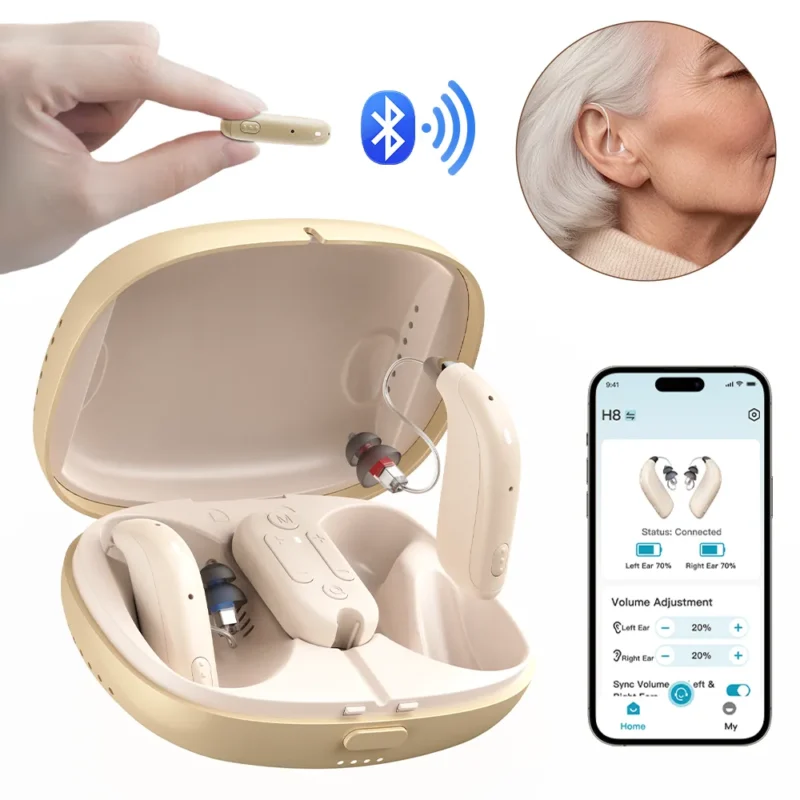
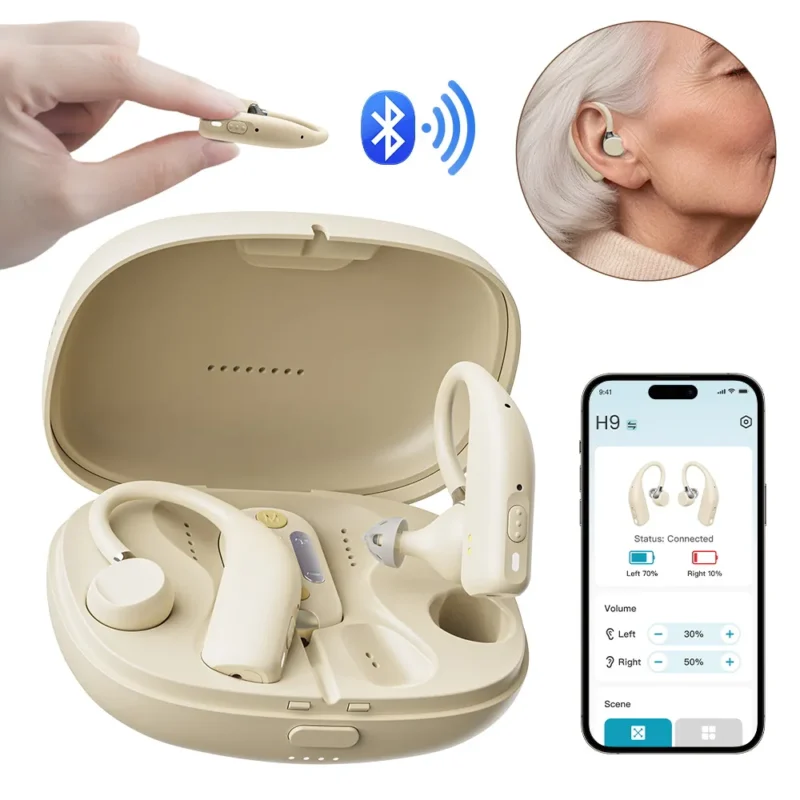
On Flysound product pages, both models highlight the same processing foundation (“PureHear 2.0 Intelligent Sound Processing”) along with AI-enhanced noise reduction and app customization. (The Best AI OTC Hearing Aids Flysound)
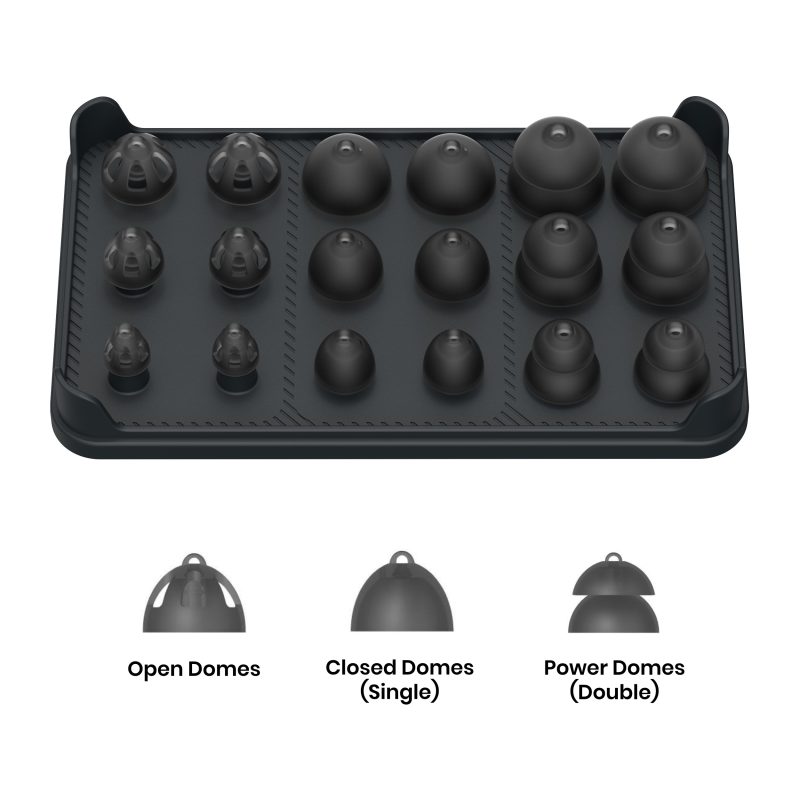
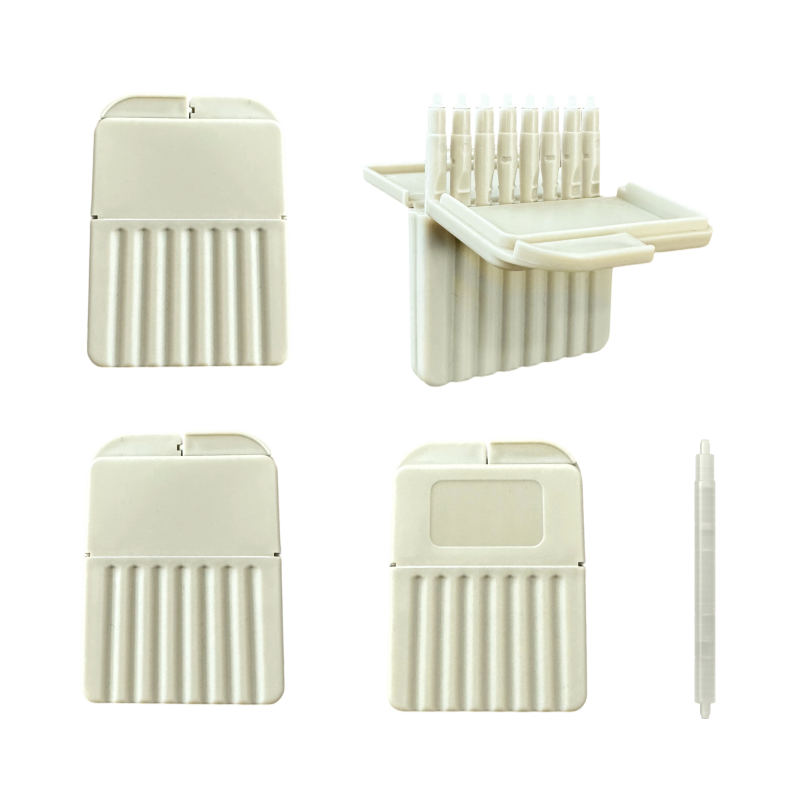
Even the best algorithm can struggle if sound is leaking heavily. A better seal (right dome size) and clean wax guards help prevent feedback in the first place. (Better Hearing)
If you hear feedback, try these steps in order:
If feedback persists daily even after fit + cleaning, that’s a strong sign you need either better fitting support or stronger feedback control.
Many adults 50+ are looking for affordable OTC hearing aids with strong gain—not just mild help, but real support for speech clarity.
Flysound lists 60dB gain and 80% improved speech recognition as a key performance claim for PureHear Pro H8 on its product-center page. (The Best AI OTC Hearing Aids Flysound)
(As with any hearing device, results depend on your hearing profile, correct fitting, and environment.)
Who it’s for (simple practical guidance):
Also note: the FDA’s OTC category is intended for adults with perceived mild to moderate hearing loss, and “self-fitting” OTC options may offer greater customization through hearing tests, software, and smartphone apps. (U.S. Food and Drug Administration)
(Practical takeaway: if you suspect sudden loss, pain, one-sided sudden change, or very severe/profound loss, a professional evaluation is still important.)
A “quiet” hearing experience usually includes:
Flysound emphasizes “No Whistling, Ultra Low Noise” on its site messaging and highlights AI-powered noise cancellation. (The Best AI OTC Hearing Aids Flysound)
That combination matters because many people don’t just want louder sound—they want cleaner speech.
For many older adults, the “best” hearing aid is the one you can actually adjust easily.
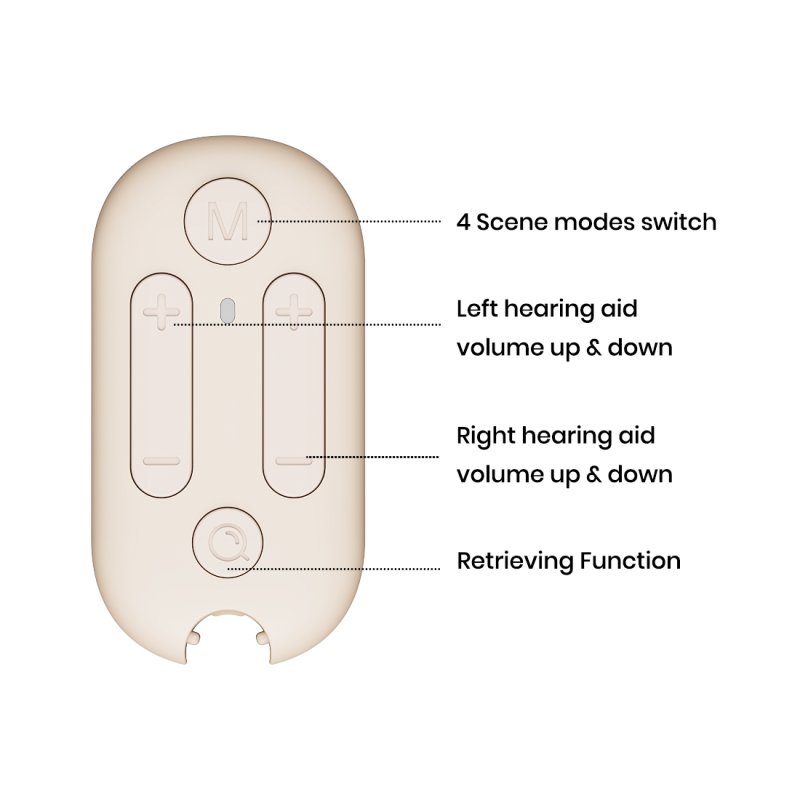
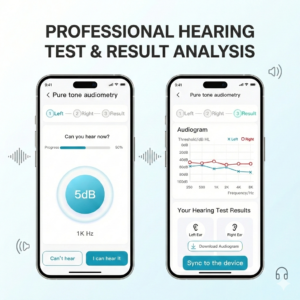
Flysound highlights app-based hearing customization at home, and its own blog explains the at-home workflow: app hearing test → audiogram-style profile → self-fitting and fine-tuning, without the time and travel burden of clinic visits. (The Best AI OTC Hearing Aids Flysound)
Even if your main concern is whistling, app control helps because you can:
That’s especially helpful during the first couple weeks, when your brain is adapting to amplified sound again.
When someone says “I gave up on hearing aids,” it’s often not only sound quality—it’s also hassle.
Both Flysound models list up to 14 hours of battery life and quick-charge support. (The Best AI OTC Hearing Aids Flysound)
Flysound also describes a charging case with long total battery life and an automatic drying routine after charging—useful because moisture is a common enemy of daily-wear devices. (The Best AI OTC Hearing Aids Flysound)
A drying case is not just a “nice extra.” Keeping devices drier can help maintain stable performance over time.

If you’re deciding between modern OTC hearing aids, use this simple checklist:
Choose the model you’ll actually wear every day, then confirm it has:
Flysound provides a 50-day return window and outlines the return process, eligibility, and refund timing in its policy. (The Best AI OTC Hearing Aids Flysound)
If whistling has been the deal-breaker for you, prioritize two things:
To explore Flysound’s OTC options, use the product links above (add them as hyperlinks in your editor), and review the Refund and Return Policy before you buy.
Over-the-counter (OTC) hearing aids are real medical devices regulated by the U.S. Food and Drug Administration (FDA). That regulation is

If you’re 50+ and noticing you can “hear” people but can’t always understand them—especially in restaurants, family gatherings, or on
If you’re 50+ and noticing you miss words (not just sounds), you’ve probably thought about going to a hearing clinic—then

If you’re 50+ and struggling to hear family conversations, TV dialogue, or the person across the dinner table, you’re not